
Key Takeaways
- The door knock is the first test. If they can’t provide a real business address, license, and local references, it’s a red flag.
- Pressure is not professionalism. Avoid “sign today only” tactics. Real pros let you decide without rushing.
- Watch the paperwork. Contingency agreements can lock you in before you see a quote.
- Deductible waivers are dangerous. They often signal fraud and lead to shortcut repairs.
- Trusted inspectors check collateral damage and provide time-based photo reports.
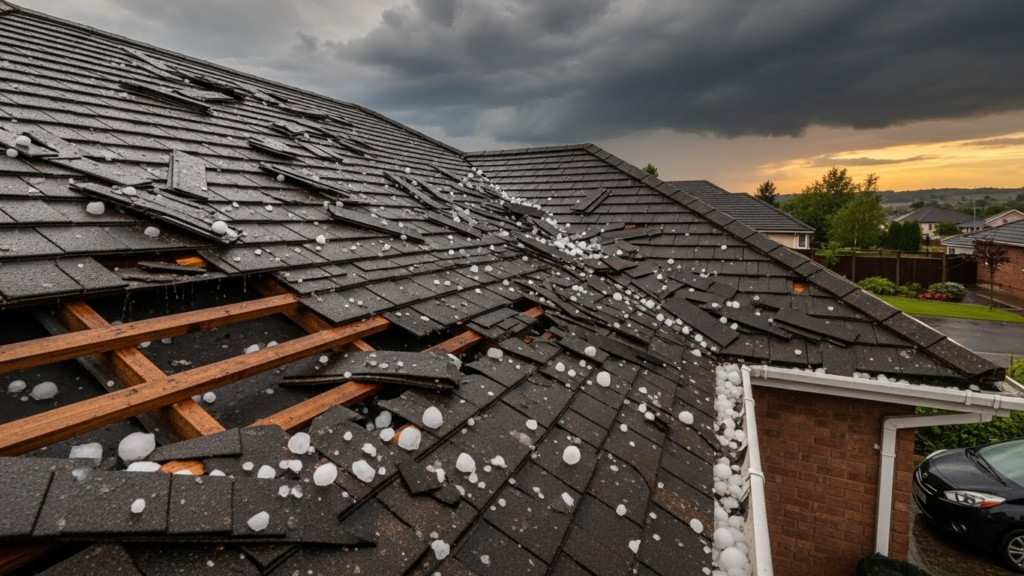
You hear the hail, you see the dents, and then you start noticing little clues the next day. A downspout looks twisted. Your gutter has fresh dings. A few shingles look scuffed. Even if your roof seems “fine,” hail damage is sneaky, and the stress of not knowing can feel worse than the storm itself.
Then comes the knock at the door. Someone says they were “just helping a neighbor” and can do a “free inspection” right now. This is where many homeowners get pulled into bad paperwork, rushed decisions, and repairs they regret later. Keep reading and I will show you the exact red flags, what real pros do differently, and how to protect your home and your claim.
The Knock at the Door: Immediate Red Flags
Right after a hail storm, scammers love to show up before you even have time to think. This section will help you spot the most common pressure moves and quick clues that separate a real local pro from a door knocking crew.
The “Just in the Neighborhood” Script
Local contractors do work in neighborhoods, yes. The difference is how they show it. A true local pro can tell you their office address, show local references you can actually call, and explain their process calmly. A simple test is to ask for their full business name, license number, and physical address before you let them on the roof. If they dodge those basics, you already have your answer.
The Urgency Trap
After a hail storm, demand spikes, and scammers know homeowners feel rushed. But legitimate professionals rarely push “sign today only” deals. If someone pressures you, slow everything down. A roof does not become safer because you signed a form in the driveway.
Visual Cues: Spotting a Canvasser
You do not need to be an expert to notice patterns. When the situation feels off, it usually is:
- Out of state license plates on unmarked trucks.
- No physical business address, only a P.O. Box or a temporary office.
- Generic high visibility vests instead of branded company uniforms.
The Legal Trap: Understanding the Paperwork
This is where homeowners get trapped, even when they think they are only agreeing to a “free inspection.” Paperwork matters because it can quietly hand over control of your project, your claim, and your choices.
The “Contingency Agreement” Explained
Many storm chasers use forms that sound harmless, like “authorization to inspect” or “contingency agreement.” The danger is that some of these documents can legally lock you into using that contractor if insurance approves repairs, even if you do not like their quote later. You might not realize you agreed to a relationship until you try to back out.
Pro Tip: Before you sign anything, ask one direct question: “Does this document require me to use your company if I file a claim or if insurance pays?” If the answer is unclear, do not sign.
Assignment of Benefits (AOB)
An Assignment of Benefits can move insurance payment rights from you to the contractor. In plain terms, you can lose control of the money and the decisions. Not every situation is the same, and laws vary by state, but the risk is consistent: once you sign away rights, fixing problems becomes harder. If any form says “assignment,” “benefits,” or “direct payment,” pause and read every line.
The Vetting Process: How to Verify a Pro
Once the storm noise fades, this is the step that protects you the most. A real professional will never be offended by basic verification.
| Business Registration | Trade License |
|---|---|
| What it is: Often just permission to operate as a business entity (for tax purposes). | What it is: Proof of competency, testing, and compliance with building codes. |
| Does it prove skill? No. | Does it prove skill? Yes, where required by state law. |
| Action: Check state business registrar. | Action: Verify number with local licensing board. |
Insurance Verification
This is not a “nice to have.” It is protection for you. Before anyone climbs your roof, ask for proof of insurance and confirm it is current.
- General Liability: Covers damage to your home (e.g., a ladder hitting your car).
- Workers’ Compensation: Critical because if an uninsured worker falls, you could end up dragged into medical and legal costs.
Manufacturer Certifications
Certifications like GAF Master Elite or Owens Corning Platinum Preferred can signal extra vetting and training. They are not magic, but they can be one more layer of accountability. A real pro will explain what the certification means and what warranties come with it, without overselling it like a trophy.

The Inspection: What a Real Pro Looks For
A proper hail inspection is not a five minute climb and a scary sentence like “you need a whole new roof.” A real pro follows a method.
Beyond the Shingles
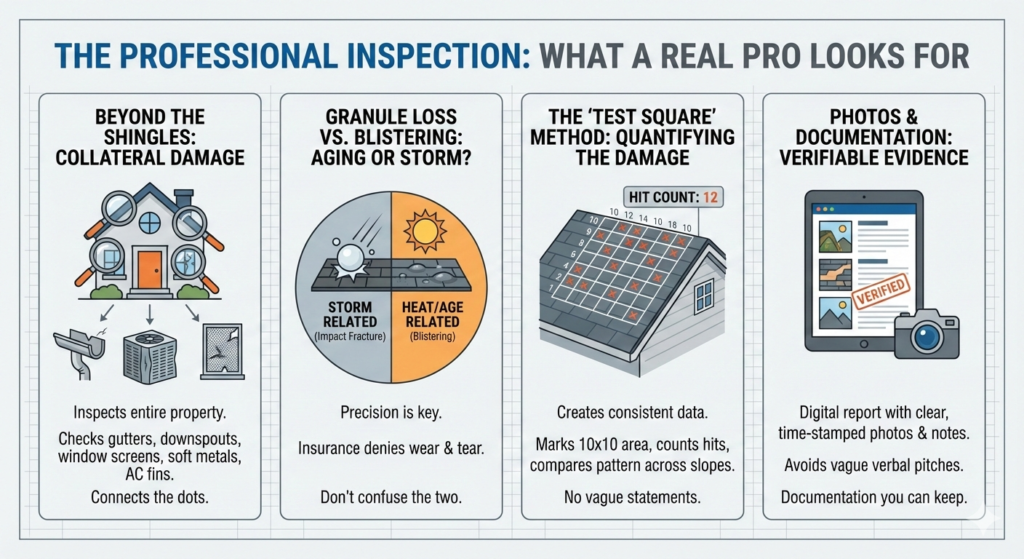
Hail hits everything. A careful inspection includes collateral damage: gutters, downspouts, window screens, soft metals, skylight flashing, and even AC condenser fins. A good inspector will walk the property, document what they see, and connect the dots.
Granule Loss vs. Blistering
One of the biggest mistakes is confusing normal aging with storm damage. Granule loss can be storm related, but it can also happen as a roof wears out. Blistering can look like hail marks from the ground, but it may be heat and age related. Insurance often denies wear and tear, so the inspector must be precise.
The “Test Square” Method
Many pros use a test square method to match how adjusters think. They mark a 10 by 10 area, count hits, note the pattern, and compare it across slopes. This creates a consistent way to talk about damage, instead of vague statements.
Photos and Documentation
A legitimate inspector gives you a digital report with clear, time based photo evidence and notes, not just a verbal pitch. The Better Business Bureau warns that scam “free roof inspections” can involve vague answers, misleading photos, or pressure after a quick look, so documentation you can keep matters.
The Claims Process: Who is On Your Side?
After a hail storm, it helps to understand who does what, because each person has a different role and goal.
- The Insurance Adjuster: Works for the insurance company and settles according to your policy.
- The Public Adjuster: A licensed independent advocate who may take a percentage of the claim.
- The Contractor: Can meet the adjuster and point out damage, but in many places cannot legally negotiate policy terms.
The Repair Phase: Quality Control
This is the stage where a good claim can still turn into a bad roof if you stop paying attention.
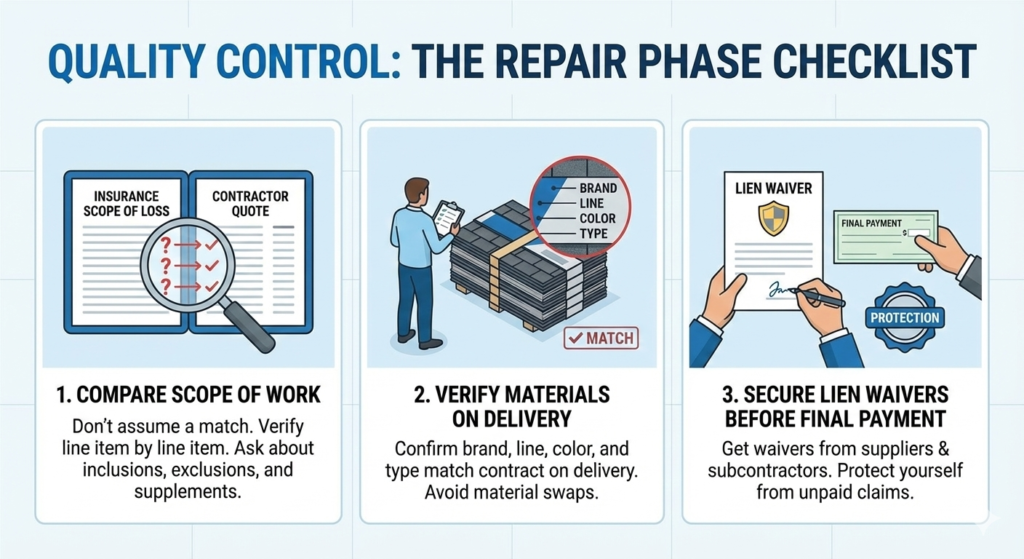
Scope of Work Comparison: Do not assume the insurance Scope of Loss and the contractor quote match. Compare line item by line item.
Material Verification: On delivery day, look at the shingle wrappers. Confirm the brand, line, color, and type match the contract. This avoids the classic “bait and switch” with lower grade materials.
Lien Waivers: Before final payment, get lien waivers. This protects you if a supplier or subcontractor was not paid. Without lien waivers, you can end up caught in a money fight you never signed up for.
Conclusion and Action Plan
The best rule after a hail storm is simple: sleep on it. Do not sign a contract during the first meeting, especially not at the door. Use the calm steps: verify license, verify insurance, get documentation, compare quotes, and keep everything in writing.
Are you ready to restore your home?
Book a professional inspection, get a clear digital report, and move forward with confidence.
